Five-Hour Rounds Are a Course Problem, Not a Manners Problem
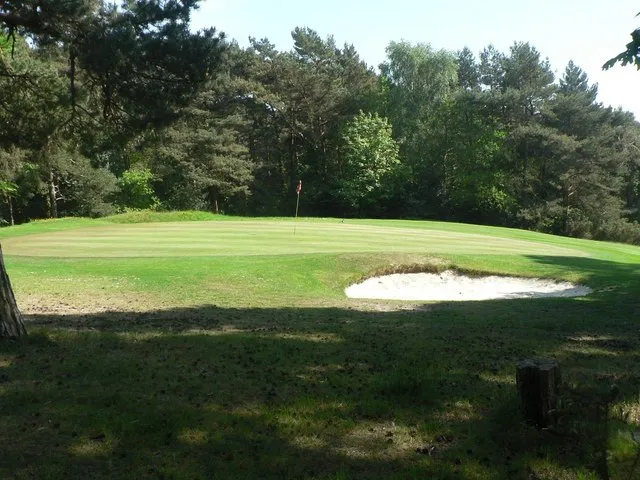
Photo: Chris Downer, CC BY-SA 2.0, via Wikimedia Commons
Slow play is the easiest argument in golf to win badly. Someone in the bar says the round took five hours, someone else says members are nattering on every tee, and the committee agrees to send another email about ready golf. Problem solved, allegedly.
Except it isn't. In 2026, most UK clubs are trying to squeeze more rounds onto courses that were laid out for fewer players, with rough that punishes a two-yard miss like a lost ball and pin positions that turn a straightforward par four into a queue. The golfer who stands over a putt for 40 seconds is not helping. But blame him for the whole five-hour round and you'll miss the bigger, more fixable stuff.
The committee's favourite culprit
Slow play is treated as a character flaw. Members are told to walk faster, think less, putt out, leave bags at the right side of the green and stop telling anecdotes on the 14th tee. All of that helps. None of it can rescue a course that has been set up to produce a five-hour round.
A golf course is a system. Tee intervals decide how many groups arrive at the first green. Rough height decides how long people search for balls. Green speed decides how many three-putts and how much fear there is over a four-footer. Pin positions decide whether the field is playing the same hole or queuing for one impossible corner. Paths, crossings and the walk from green to tee decide whether a group can keep its rhythm.
Get those wrong and the most polite, quick-walking membership in Britain will still finish in the dark.
Where the time actually goes
Start with tee intervals. Eight-minute gaps look busy and commercial. They also put four groups on the same par three within half an hour. Ten minutes is better. Twelve is better still on a course with long walks, blind shots or a couple of genuinely hard par fours.
Then look at the rough. Primary rough at knee height does not defend the course; it defends the scorecard by making every ordinary miss a search party. A ball two yards off the fairway should be findable and hittable with a wedge. If it isn't, the course is charging every group five minutes per miss.
Green speed matters too. A stimpmeter reading of 10.5 might impress visiting golfers. On a windy Saturday with sloping greens and pins near the edges, it creates hesitation, three-putts and groups waving each other on all afternoon. A touch slower and a bit more sensible can save ten minutes without making the course easy.
And pin positions. A flag two paces from the edge on a ridge is not a test; it is a traffic jam. On busy days, the pin sheet should keep flags in playable quadrants. Let the course be hard. Don't make it stationary.
A member's 2026 audit checklist
Take this to the committee as data, not as a rant. Bring a stopwatch, a notebook and a willingness to be boring. Boring works.
- Time five consecutive groups from the first tee to the first green, and again from the 10th tee to the 10th green.
- Record the actual tee interval on a busy Saturday. Not the interval in the diary. The one happening on the ground.
- Time how long the average group spends on each par three, including waiting on the tee.
- Count lost-ball searches in one round. Note whether the ball was in primary rough, deep rough or simply off the fairway.
- Measure rough height in three places: first cut, primary rough and thick stuff.
- Ask the greenkeeper for the current green speed and how it changes on windy days.
- Photograph the pin positions for one weekend. Mark which flags are within three paces of an edge.
- Walk the course at member pace and note every point where a group has to wait for a green to clear before it can even reach the tee.
- Check signage on blind holes and crossings. If visitors don't know where to go, they will stop and think.
- Review the first two holes. Are they among the hardest on the card? If so, the field is stacking up before it has settled.
- Ask the pro shop how many groups are booked per hour and whether that changes in winter.
- Look at the 18th. Is there a bottleneck before the green, or a walk back to the clubhouse that holds up the next tee?
Small fixes that don't dumb down the course
The good news is that most of this can be fixed without turning the course into a pitch-and-putt. Keep the bunkers. Keep the length. Keep the greens interesting. Just stop setting the course up as if every round is a national final.
Move to 10-minute tee intervals on Saturdays and see what happens. Reduce primary rough by 10-15mm. Set weekend pins away from the edges. Mow a walkway through the rough where people cut across. Put a drop zone on the one forced carry that eats groups alive. Move one par-three tee forward by 20 yards on busy days. Introduce a local rule for lost balls in thick rough during winter. Put a marshal on the 10th and 13th, not just the first.
None of that makes the course easier in any meaningful sense. It makes it faster. There is a difference.
Bring a stopwatch, not a petition
Slow play is not a manners problem that can be solved by a sharper email. It is a design and setup problem as much as a behaviour problem. The committee should still ask members to play ready golf and wave groups through. But it should also ask why a fourball can stand on the 15th tee for nine minutes without anyone hitting a shot.
If your club wants shorter rounds in 2026, start with the course. The members will meet it halfway.