The Flag Is a Rumour: A Landmark-First Plan for UK Fog Golf
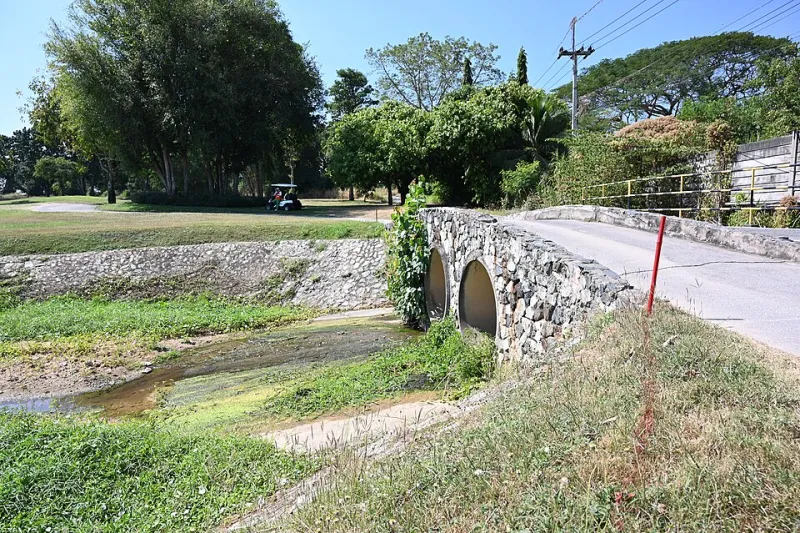
Photo: Duncanharrington, CC BY-SA 4.0, via Wikimedia Commons
Fog does odd things to a golfer's decision-making. The flag disappears, the green becomes a rumour, and suddenly a routine 7-iron feels like a leap of faith. That is the moment most of us make the wrong choice: we aim at where we think the pin is, swing a little harder, and hope the ball lands somewhere sensible.
In UK winter golf, that is not strategy. It is gambling with a scorecard.
Fog Is a Distance Problem
On a clear day, you can see the flag, the green, the bunkers and the run-off areas. Your brain has enough information to pick a club and a target. In mist, that information vanishes. You are left guessing at carry, guessing at roll, and guessing at what the wet turf will do when the ball lands.
The fix is not to be brave. The fix is to be boring. Treat fog as a distance problem, not a test of character. You need a conservative target line, a club that covers the invisible gap, and a plan for the shot that does not come off. That is where the three-club visibility rule earns its keep.
The Three-Club Visibility Rule
If you cannot see the flag, you are no longer playing to the flag. You are playing to a landmark. Before you take the club back, name three clubs in your head:
- The carry club. This is the club that clears the visible trouble in front of you. In fog, that trouble is often closer than it looks. Take one more club than your clear-day instinct suggests.
- The cover club. This is the club that covers the invisible distance to your chosen landmark. If the flag is hidden but the front edge of the green is not, play to the front edge. If the green is hidden too, play to a bunker lip, a tree line or a marker post.
- The bail-out club. This is the club you will use if the shot goes wrong. It might be a wedge for a chip back to the fairway, or a putter from off the green. Deciding it before you swing stops you from trying a hero recovery through the mist.
The rule is not about limiting your options. It is about removing the daft one. If you cannot see the landing area, you do not get to choose the hero club.
Aim at Shapes, Not Flags
Fog rewards golfers who can aim at shapes. A clubhouse roof, a fairway bunker, a distant treeline, a greenside mound, a marker post: these are fixed points. The flag is not fixed in your vision, and the pin is certainly not the plan.
On a parkland course, pick a tree that sits on your intended line and aim at its trunk. On a links, use the top of a dune or a fairway marker. On a course you know well, use the shape of the fairway rather than the pin. If you cannot find a landmark, choose the widest part of the fairway and the middle of the green. That is not defensive golf. It is sensible golf.
Club up for invisible carry. In cold, damp air, the ball does not travel as far as your summer number. Add the fact that you cannot see the landing spot, and the safe play is usually one or two clubs more than usual. The exception is into a green where long is dead. In that case, take the club that reaches the front and no more. Fog is not the time to flirt with the back edge.
The Fog Pre-Shot Checklist
Keep this short enough to use in a medal, not just on the range.
- Find two landmarks. One for your target line, one for your bail-out. If you cannot find two, aim for the middle.
- Check the ground wind. Fog often hides the wind at head height. Look at the flag, the treetops and the way your playing partners' waterproofs hang.
- Pick the carry club, not the pin club. One or two more than your clear-day number.
- Choose a target line away from penalty areas. In fog, the safe miss is a long approach, not a lost ball.
- Decide the bail-out before address. Wedge out, putt from off the green, or chip to the middle. Know it before you swing.
- Agree who watches what. In a roll-up, one player watches the first ball, another watches the second. Do not all stand in the same spot staring into the same grey wall.
- If visibility drops below two flag-lengths, stop. Call the pro shop. No score is worth playing blind.
Safety and Pace of Play
Fog is a safety issue before it is a scoring issue. If you cannot see the group ahead, do not hit. If you cannot see your playing partners, stop and regroup. Keep buggies and trolleys off slopes you cannot read. Wear something bright. Shout fore early, because the ball will disappear before the shout does.
Pace of play matters too. Fog slows everyone down, so cut the faff. Play ready golf, leave bags on the correct side of the green, and do not conduct a ten-minute search for a ball you never saw land. In a medal, play a provisional if there is any doubt. In a roll-up, the group's rhythm is more important than your pride. If the group behind is moving faster, let them through. Fog is frustrating enough without turning it into a traffic jam.
The flag may be a rumour, but your scorecard is not. Play to landmarks, take the extra club, choose the boring bail-out, and keep the round moving. Fog golf is not a bravery test. It is a distance problem, and you can solve it one sensible shot at a time.