The Scorecard Doesn't Care Which Tee You Chose — Your Data Does

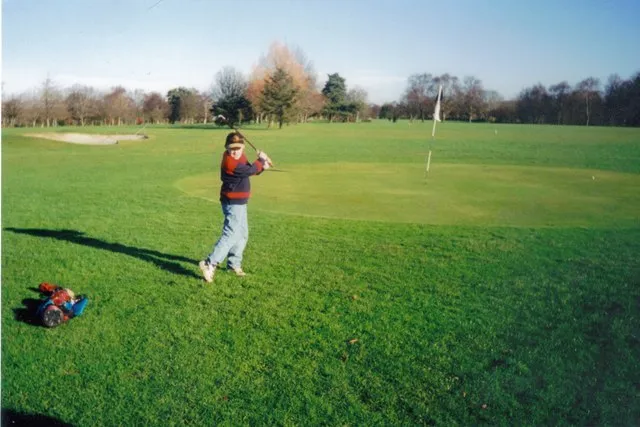
Photo: Nick Birse, CC BY-SA 4.0, via Wikimedia Commons
There is a stubborn idea in UK club golf that moving forward a set of tees is a small surrender. You can hear it in the car park: 'I'm not playing the front box', 'I'll stick to the medals', 'I'm not a senior yet'. It is usually said by someone who has just hit a fairway wood into four par fours and called it a bad day.
The forward tee is not a demotion. It is a data upgrade. In 2026, with the World Handicap System settled into club life, we have more information about how a course actually plays than ever. Course rating and slope rating tell you what the course asks of a scratch player and how much it punishes a bogey golfer. Your own driving distance tells you whether you can answer the question. Choosing tees without those numbers is like buying a driver without checking loft.
Course rating and slope are not admin decoration
Course rating is the score a scratch golfer is expected to shoot. Slope rating is the relative difficulty for a bogey golfer, with 113 as the baseline. A 6,300-yard course with a slope of 134 is a very different examination from a 6,300-yard course with a slope of 116. Yardage alone is a blunt instrument.
That matters because most golfers pick tees by total length and ego. They see 6,700 yards and think 'that looks proper'. They do not see that the par fours are long, the rough is thick and the course rating is two shots over par. They do not see that the slope rating will turn a 14 handicap into a 17 course handicap before they have hit a shot. The card is telling them something. They are just not reading it.
Step one: measure the drive you actually have
Take ten tee shots on your home course in normal conditions. No downhill, no wind, no 'that one didn't count'. Use a GPS app or a launch monitor. Take the median, not the longest. Most mid handicappers find their medal drive is 15 to 25 yards shorter than the one they remember. That is the number that should influence your tee choice.
This is not about talking yourself down. It is about removing the fantasy drive from the decision. If your honest average is 210 yards, a 6,700-yard medal course will ask you to hit fairway woods into par fours all day. That is not a test of skill. It is a test of optimism.
Step two: run a par-four approach audit
Take a scorecard. For every par four, subtract your median drive from the card yardage. If you are left with a fairway wood or hybrid into more than four par fours, the tees are probably too long for your game. If you are hitting short irons into most of them, you have room to move back. The aim is not to make every par four reachable with a wedge. It is to make sure you are playing the course, not just surviving it.
Do the same with the par threes. If the shortest par three still needs a hybrid and the longest needs a driver, you are on the wrong box. A good set of tees should give you a mix: short iron, mid iron, long iron, maybe one fairway wood. Variety is the point. Constant survival is not.
Step three: check the rating, slope and your course handicap
Use the WHS formula: Handicap Index × (Slope Rating ÷ 113) + (Course Rating − Par). Compare the result across the tee sets. A forward tee that drops your course handicap by one shot but lets you hit three more greens in regulation is not the easy option. It is the sensible one. Slope matters because it tells you how much the course's trouble will cost you. If the slope jumps from 118 to 136, you are not just adding yardage. You are adding penalty.
The goal is not to find the shortest course in the county. The goal is to find the set of tees where your course handicap, your approach clubs and the course rating line up. That might be the middle tees at your home club and the forward tees at the links you play once a year. There is no rule that says you have to play the same colour every time.
What forward tees actually do
They change the question. Instead of asking 'can I get there?', they ask 'can I hit the shot?'. You get shorter clubs into greens, which means more spin, better control and fewer long putts. You get more chances to play the course as it was designed, rather than hacking out of rough and hoping for a two-putt. You get a scorecard that reflects your actual game.
The ego is the most expensive club in the bag. It costs you strokes, time and enjoyment. The data is cheaper. Before your next medal, ring the pro shop and ask which tee matches your average drive and your handicap. Play it for three rounds. Keep score. The scorecard will not know which tee you used. It will only know what you shot.